Communities in Action to Prevent Suicide, part III

A core value, again taken from The Way Forward, that Ursula Whiteside highlighted during her keynote:

Preserve dignity and counter negative stereotypes, shame, and discrimination

“The negative perceptions of behavioral health issues and subsequent discrimination pose major barriers to help-seeking.” …. “Stigma, negative stereotypes, and discrimination (covert or subtle) are particularly damaging when we already suffer from depression, hopelessness, damaged self-image, trauma, self-doubt, and shame – thoughts and feelings common during a suicidal crisis. In contrast, when we are treated with dignity and compassion, it reaffirms our sense of worth and value.”

My second psychiatrist (and each of those who followed) treated me with the dignity and compassion I needed to progress. It made a HUGE difference. One appointment I’ll never forget is the day I thanked him for NOT telling me ‘my difficulties’ were that I was ‘too sensitive’ (as I had been told by my first psychiatrist) . My doctor got very still, sat up straight, looked me in the eye, and said, “Gail, it’s not that you are too sensitive. You have major depression. It is an illness for which we will pursue and persist in finding the right treatment combination for you.”

He treated me with full dignity by clearing up any chance that I would misunderstand ‘sensitivity’ for major depression. Or think that ‘my difficulties’ were only that, ‘difficulties,’ and that they were something I caused. I felt affirmed and clear about the real lesson I was learning.

I particularly like this core value because it is so active…….counter stigma.

You can see from the photographs that Dr. Whiteside – Ursula – is younger than I. Her experience and youth were very helpful as I gained insight on how to reach to a younger public than I am used to addressing. She does social media very well; I need to go there too. The mid-part of her keynote presented her vision developing www.NowMattersNow.org into an online public resource focusing on strategies for managing suicidal thoughts and intense emotions. Ursula introduced us to her colleagues: Team Now Matters Now. I smiled with pleasure as one of the team members mentioned was Marsha Linehan, PhD, clinical psychologist. Nothing more was said about team member Marsha … But it’s worth noting that Dr. Linehan is the creator of Dialectical Behavior Therapy, the psychotherapy that has helped so many people with borderline personality disorder. She is well known and admired for her work.
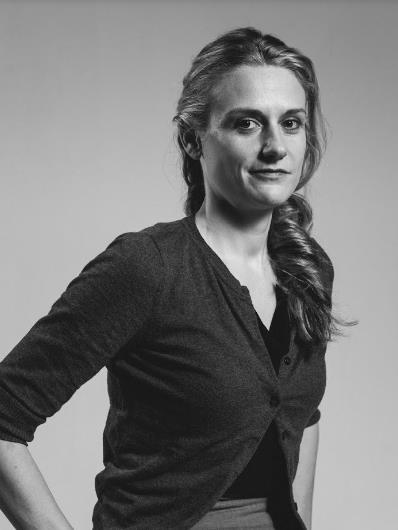
DrUrsulaWhiteside    DrMarshaLinehan

Ursula summarized what she and Team Now Matters Now had learned from suicidal people working through a crisis. Here are some of these points (underline emphasis is Ms. Whiteside’s):
Be fully present with me
• Help me hold my pain ( so I feel less alone in my pain)
• I feel helpless, broken and scared
• Discuss with me my diagnosis, as it is in the charts and go thru the DSM criteria with me
When including family and friends, tell me and let me decide who and how
Help me empower myself
• Gently examine my paranoid thoughts with me
• First I need empathy, a witness (rather than fixing)
Know that I am telling you about my suicide ideation/plans because I want to live, I want help and I want to work together

Communities in Action to Prevent Suicide, part II

Spring in Wisconsin has brought us needed and gently persistent rainfall. Nourishing rain on fertile ground; good food for our thoughts together.

Ursula’s keynote message, “…Zero Suicide and the Engagement of Those with Lived Experience” was a blend of her experiences working with others, and of new directions advocated in “The Way Forward: Pathways to Hope, Recovery, and Wellness with Insights from the Lived Experience, 2014”.

The Way Forward is the most readable, engaging, no-nonsense document that I have ever read. In fact, it is so good and there is so much to learn from it, that I read deeply through the report twice! It is a unique and creative look at suicide prevention. Prepared by the Suicide Attempt Survivors Task Force of the National Action Alliance for Suicide Prevention, the report’s recommendations are based on and prepared by people who have previously attempted to take their own life, and are now helping others in a crisis situation. Over the next days, I will highlight core values and recommendations from the report as presented in Ursula’s keynote. The first core value is:

Foster hope and help people find meaning and purpose in life

Pervasive hopelessness is a major risk factor for suicidal thinking and behavior. Studies have found that hope and optimism can help guard against suicide. From The Way Forward: “Hope is also linked to self-esteem and self-efficacy, as well as improved problem-solving. The pursuit of meaning can help a person cope with pain and suffering. Similarly, research on reasons for living has demonstrated that meaning and purpose are keys to recovery in many different groups of people who have lived through a suicidal crisis.”

I know this well. In my own suicidal crisis, I was saved by my husband who knew, somehow, that he had to teach me how to hope. (Please see Oh So Real: Pregnancy and Suicidal Depression) I had no hope for me or our unborn child, but I did have hope in our beautiful daughter who was about to turn 5 and start kindergarten in the fall…….when the baby was due. So Jim taught me to focus on specific events or achievements or activities of our daughter. One hope at a time, sometimes very small, got me through those difficult days and hope for her life certainly gave me a reason for living that had meaning and purpose. While the psychic pain of feeling suicidal is or can be overwhelming, meaning and purpose dull the pain…….take pain from the driver’s seat to the back seat.

It is possible to fuel a very small hope.

Communities in Action to Prevent Suicide, part I

Hello spring!  And hello during this National Mental Health Awareness Month.

Last Wednesday, April 29th, 2015, I attended the Communities in Action to Prevent Suicide conference put on by a growing organization I want you to know about, prevent suicide wisconsin, and Mental Health America, Wisconsin.

Reading the preconference materials, I was immediately attracted to one of the keynote speakers, Ursula Whiteside, PhD, a Clinical Psychologist from the University of Washington.  Ms. Whiteside is a member of the National Action Alliance for Suicide Prevention’s Zero Suicide Advisory Group.  The Action Alliance was launched by former U.S. Health and Human Services Secretary Kathleen Sebelius and former U.S. Defense Secretary Robert Gates to champion suicide prevention as a national priority. To quote from their literature, the Alliance champions “…a nation free from the tragic event of suicide.”

DrUrsulaWhitesideI wrote to Ursula before the conference, and to my delight she agreed to meet with me for a casual interview early in the morning, before her keynote. I greatly enjoyed meeting her, learned a lot, and am further encouraged.  She is a suicide attempt survivor herself and also knows and understands the Zero Suicide movement, an approach to suicide prevention that I’ll be discussing with you in my next post or two this week.

Stay tuned.

The Coming Days Emphasis ………… Suicide Prevention

Good day!   I officially launched my website and blog last Friday and Saturday at the NAMI (National Alliance on Mental Illness) Wisconsin Conference. So many friends and colleagues expressed interest and well wishes to me that I am more eager to write than ever.

I took yesterday off to spend an afternoon hiking the prairie and woodsy grounds of one of my favorite places, the International Crane Foundation (ICF) near Baraboo, WI. It was so serene and peaceful that I was able to see long and deep. Today I find my mind is free and my body is relaxed to think and write.

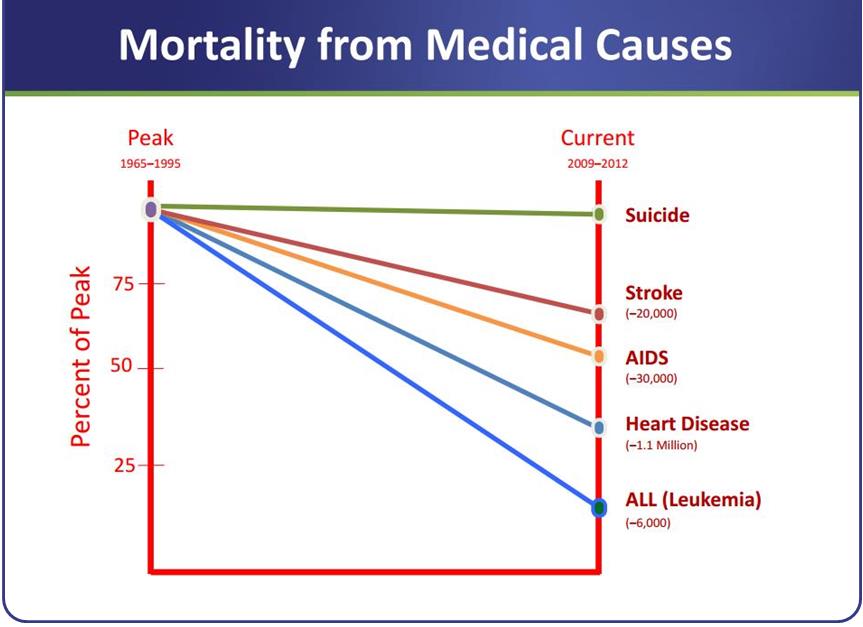
I will focus on prevention of suicide in my coming posts this spring. Particularly on advances in suicide prevention. Why? I believe suicide prevention should be a top priority for mental health organizations and concerned individuals, indefinitely. The US suicide rate is unchanged in 2 decades. Mortality from various medical causes has decreased (see charts below).
In hope of gathering current material on advances in suicide prevention, I am traveling to Stevens Point on Wednesday to attend another conference. The conference theme is “Communities in Action to Prevent Suicide” put on by Prevent Suicide, Wisconsin and sponsored by Mental Health America (MHA). There are two nationally known keynote speakers from the prevent suicide movement featured. I am eager to hear what they have to say and the advice they have to give.

I will couple the information from the Stevens Point conference with the conclusions and recommendations offered in the report The Way Forward: Pathways to hope, recovery, and wellness with insights from lived experience, National Action Alliance for Suicide Prevention: Suicide Attempt Survivors Task Force. (2014).  The report is available on my Resources On Suicide page. My hope is that you will feel better informed to look at suicide prevention practices in your area and seek input, if needed, and to update local policies and procedures to save more lives.


These graphs from a keynote presentation by Dr. Thomas Insel, Director of National Institute of Mental Health at the NAMI annual convention


On Forgiveness

One aspect of my illness that I’ve struggled with for many years is forgiveness – forgiving the people, events, and even the institutions where I have felt anger, humiliation and pain.

Why do I struggle and feel so strongly about this? A level playing field must be found among friends, family and providers to nurture communication, comfort and a new beginning. Imagine setting aside blame while acknowledging responsibility. Think of deeds being forgiven and the tangled web of the past losing its ability to shape our future.

Just what deeds am I thinking of forgiving? Sadly, they are all real, and the ability to forgive them will not come easily. People with mental illness many have experienced being abandoned when ill, or we may remember restraints and seclusion. We may have experienced involuntary commitment, deep humiliation, or poor care resulting in severe symptoms that led to years of mistrust toward caregivers. For many family members, deeds that need forgiving may include their relative’s antagonistic behavior, violent acts or threats of violence, sexual infidelities and indiscretions, verbal abuse, or unreasonable demands or careless spending sprees which left the family in debt.

I have a thoughtful book of essays that is helping me sort through many questions about forgiveness. What is forgiveness between us? Why forgive? And where to begin? Exploring Forgiveness, edited by Robert Enright and Joanna North, contains a forward by Archbishop Desmond Tutu of South Africa that states:

“Forgiveness is taking seriously the awfulness of what has happened when you are treated unfairly. It is opening the door for the other person to begin again. Without forgiveness, resentment builds in us, a resentment which turns into hostility and anger. Hatred eats away at our well being.”

What I am learning is that forgiveness is not pretending that things are other than they are. It is not cheap. Robert Enright and others write that forgiveness does not mean forgetting. And yet it is more than tolerating. I was startled to read that forgiveness is beyond letting go of negatives, such as anger; it is also the inclusion of positive gift-like qualities such as compassion, generosity, and even love. Joanna North insists that forgiveness is hard work, and that:

“Forgiveness is not something that we do for ourselves alone, but something that we give or offer to another. The forgiving response is outward-looking and other-directed; it is supposed to make a difference to the wrongdoer as well as to ourselves, and it makes a difference in how we interact with the wrongdoer and with others.”

Learning how to forgive includes understanding both the perspective of the injured party and that of the wrongdoer. When we begin to separate the wrongdoer from the wrong which has been committed; we also begin to see the person who has committed a particular wrong. Healing can then occur to the person injured and to the relations between the two parties.

It is my hope that in the year to come we can learn, as people with mental illnesses and as family members, to speak not only of understanding and empathizing with the other, but also to explore issues of forgiveness. “Without forgiveness there is no future,” Bishop Tutu declared.

Let us create a good future.

About Partnerships … thinking about enhancing care and support within them

46 years. That’s how long my husband and I have been married.  And it was 50 years ago when we first dated, a sweet memory today.  Jim has always been the very kindest, most fun and interesting man I know.  Our kindness toward one another is a key to our relationship, especially when the water wasn’t so smooth due to effects of mental illness on my thoughts, feelings and behaviors.

My partnership is our marriage.   It is the most supportive aspect of our lives together.  It is, it turns out, quite a bit stronger than mental illness.  Yours may be another partnership – marriage is not the required word, but supportive is.  How do we support our partner without being overwhelmed?  How can we be supported without having to feel we’re a burden?  I don’t have all the answers, but we do have some suggestions here based on our experience.

Resources on Suicide – and the way forward

I’ve written a resource page on Suicide – Look on the menu bar, click Suicide and then Resources on Suicide.  There are links there for anyone who may be at risk for suicide or is a survivor of a suicide attempt.  I hope they can be of help for you.

Especially I want to draw attention to the link for the report The Way Forward: Pathways to hope, recovery and wellness with insights from lived experience (2014 pdf), by the National Action Alliance for Suicide Prevention’s Suicide Attempt Survivors Task force.   The report is unique in its breath and scope, and unique in that its co-leads were one, a survivor of suicide attempts and mental health advocate, and the other, a psychologist with years of experience working with people in suicidal crisis.

“For far too many years suicide prevention has not engaged the perspectives of those who have lived through suicidal experiences. Because of social stigma and fear, as well as personal shame, a culture of silence prevailed. The Way Forward represents a seminal moment in this field’s history; it is an opportunity to benefit from the lived experience of suicide attempt survivors. Many of its recommendations are derived from evidence-based practices, and several are aspirational. All are grounded in the evidence of recovery and resiliency that is clear in the lives of our Task Force members.”
– from the report.

Chronic Mental Illness: Recovery while (Still) Homeless?

Did you know that among the large population we in the United States have of homeless people, approximately 30% are people with serious mental illness! Yes, at least 30%. Fifty percent, if you count those that also have substance abuse disorder. These homeless, along with those individuals with mental illness in prison and jails, are the forgotten of our world … even at times, forgotten by the advocates of mental health policy and care. They are out of view and out of mind.

Do we assume we can’t do much or shouldn’t do much for these forgotten?
Or do we realize we can end homelessness?

“Providing someone who is chronically homeless with a home first gives them the stability that they need to begin the process of recovery.” – Sam Tsemberis, Pathways to Housing

I couldn’t agree more … recovery is hard enough when you have a stable home!

One of the unique features of Pathways’ Housing First model is that participation in treatment or sobriety as a precondition is not required for housing. [More here]

To Tell or Not To Tell – Discussing self-disclosure

I’ve been reading summaries of research on stigma-busting that lay it on the line. Publishing facts about mental illness, as for example, how treatment helps people live successfully, does not assist in alleviating stigma. Highlighting the stories of people with mental illness who have achieved significant accomplishment, does not curb stigma either. What does work is for ordinary people to get to know ordinary people with mental illness personally! For stigma-busting and awareness and acceptance of mental illness to happen, individuals with mental illness need to be able to safely self-disclose or identify that they have received mental health treatment. Both peoples need to get acquainted and know each other. Nothing breaks down barriers like good communication. Acceptance and trust can be built up by direct experience of the other. But someone has to take the first step. Will it be you? Should it be?

I want to talk about the role of self-disclosure in advocating for people with mental illness. I am hoping to reach out to you especially if you have a mental illness yourself or are related to someone who lives with mental illness. [Continue reading the article under Real Life; Real Challenges]

From Shame – Moving Toward Healing

During the recent half decade I have been so fortunate, as Brene Brown* describes, to have completed the journey from the “not being good enough” shame struggle to believing and knowing “who I am is enough.” Shame from having mental illness has left me. Shame from being related to other people with mental illness has left me also. I have been graced.

I only recently realized I had made this journey. I understand now how much shame – and my growing resilience in the face of shame – had influenced the course and depth of my mental illness through the years.

It didn’t happen, this journey to being shame-free, automatically. I happened to want to do what is recommended for building shame resilience for other reasons; I wanted to help others cope with mental illness. Often, as part of my work, I told my story of family and personal mental illness. I didn’t realize then, twenty five years ago, how much nurturance I would receive from assisting others.  My story of the power of shame and how I arrived at healing from shame follows …. [Read the Full Article]


*   Brene Brown, PhD, LMSW   Audio lecture, 2012: Men, Women & Worthiness, The experience of Shame and the Power of Being Enough.  Available on CD at Soundstrue.com  PO Box 8010/Boulder CO  80306.